Book Appointment Now

Lipoma Treatment in Delhi NCR
A lipoma is a lump made up of fatty tissue that usually develops just beneath the skin. Although lipomas are generally harmless, you may want to have a lump medically assessed if it grows, causes discomfort or affects your daily life.
KenZen Health Tech helps patients connect with relevant doctors to assess lumps, understand available treatment options and discuss whether lipoma removal may be appropriate.
A qualified doctor can examine the lump, explain the assessment process and discuss potential treatment options, risks and recovery.
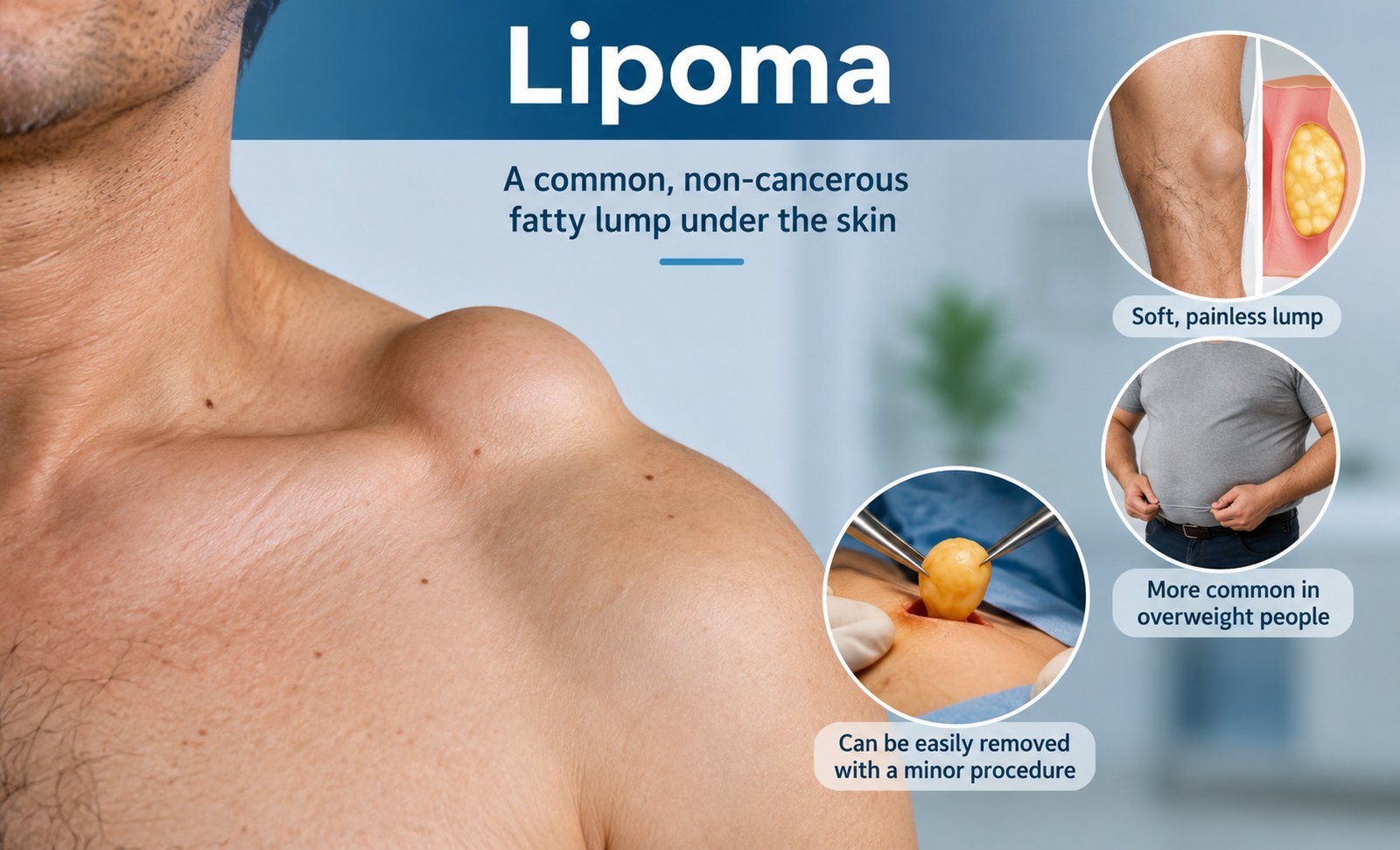
What Is a Lipoma?
A lipoma is a slow-growing lump made up of fatty tissue that develops just beneath the skin. It is usually soft to the touch, may move slightly when pressed and is generally harmless.
Lipomas can develop in different parts of the body, including the neck, shoulders, back, arms and thighs. Most do not cause pain, although some may become uncomfortable depending on their size and location.
Common Characteristics of a Lipoma
Soft or doughy lump: A lipoma typically feels soft and may move slightly under the skin.
Slow growth: Most lipomas grow slowly and may remain unchanged for long periods.
Usually painless: Most do not cause discomfort unless they press on nearby nerves or other structures.
Located beneath the skin: They commonly develop on the neck, shoulders, back, arms or thighs.
What Causes Lipomas?
The exact cause of lipomas is not fully understood. Genetics may play a role, and some people develop multiple lipomas. They are not generally caused by poor hygiene or an unhealthy lifestyle.
Is Every Lump Under the Skin a Lipoma?
No. Other conditions, including cysts and different types of growths, can also cause lumps beneath the skin. A doctor should assess a new or changing lump rather than assuming it is a lipoma.
Seek prompt medical assessment if a lump grows rapidly, becomes hard or fixed, causes significant pain, or develops other unusual changes.
When Should You Consider Lipoma Treatment?
Many lipomas do not require treatment. However, medical assessment and possible removal may be considered if a lump causes discomfort, restricts movement, grows, or raises cosmetic concerns.
KenZen Health Tech helps patients connect with relevant doctors to assess lumps and discuss appropriate lipoma treatment options.
A clear, medically appropriate illustration or photograph showing a typical subcutaneous lipoma.
When Should a Lipoma Be Removed?
Not every lipoma needs to be removed. If a lipoma is small, stable in size, and does not cause discomfort, a doctor may recommend monitoring it.
Lipoma removal may be considered when:
The lump is painful or tender: It causes discomfort or presses on nearby nerves.
It continues to grow: An enlarging lump should be examined by a doctor.
It affects movement: Its location or size interferes with everyday activities.
It causes cosmetic concerns: You want to discuss removal because the lump is noticeable.
The diagnosis is uncertain: A doctor may recommend further evaluation to determine what the lump is.
A new, rapidly growing, deep, hard, or fixed lump should be medically assessed rather than assumed to be a lipoma. Your doctor will determine whether examination, imaging, or other tests are needed before recommending treatment.
The right approach: Get the lump evaluated by a qualified doctor to understand whether monitoring or removal is appropriate for you.
Lipoma Treatment Options
The appropriate treatment for a lipoma depends on its size, location, symptoms, and the doctor’s assessment. Many lipomas do not require treatment if they are small and not causing problems.
1. Observation and Monitoring
If a lipoma is not painful, is not growing, and has been assessed as harmless, your doctor may recommend monitoring it over time.
2. Surgical Lipoma Removal
If a lipoma causes pain, continues to grow, affects movement, or creates cosmetic concerns, a doctor may recommend surgical removal. The procedure involves removing the lump, usually through an incision made over the affected area.
3. Further Evaluation When Needed
If a lump has unusual features or the diagnosis is uncertain, the doctor may recommend imaging or other investigations before deciding on treatment.
Which Treatment Is Right for You?
There is no single treatment approach suitable for every lump. A qualified doctor can assess the affected area, explain the available options, and recommend an appropriate plan based on your individual needs.
Benefits and Risks of Lipoma Removal
When a lipoma causes discomfort, continues to grow, or affects your daily life, removal may help address these concerns. However, the decision should be made after a doctor’s assessment.
Potential Benefits of Lipoma Removal
Relief from discomfort: Removing a symptomatic lipoma may reduce pain or pressure.
Improved comfort and movement: Removal may help when the lump interferes with everyday activities.
Cosmetic improvement: Removing a visible lump may improve the appearance of the affected area.
Examination of the lump: The removed tissue may be sent for laboratory analysis when recommended by the doctor.
Possible Risks and Side Effects
As with any surgical procedure, lipoma removal has potential risks, including:
Pain, swelling, or bruising around the treated area.
Bleeding or infection.
Scarring at the incision site.
Fluid collection or delayed wound healing.
Recurrence of the lipoma in some cases.
The likelihood of complications depends on factors such as the lipoma’s size and location, the procedure used, and your individual health.
Make an Informed Treatment Decision
Your doctor can explain the expected benefits, possible risks, and recovery requirements based on your condition. Lipoma removal is not necessary in every case, so treatment should be guided by an appropriate medical evaluation.
What to Expect Before and After Lipoma Removal
Understanding the treatment process can help you feel more prepared for a lipoma removal procedure. The exact steps depend on the size and location of the lump and the treatment recommended by your doctor.
Before the Procedure
Medical evaluation: Your doctor will examine the lump and review your medical history.
Recommended investigations: Imaging or other tests may be advised if the diagnosis is uncertain or the lump has unusual features.
Procedure planning: Your doctor will explain the removal method, anaesthesia, potential risks, and preparation instructions.
Medication guidance: Inform your doctor about your current medicines and existing health conditions.
During the Procedure
Lipoma removal is commonly performed through a surgical procedure in which the doctor removes the lump through an incision. Local anaesthesia may be suitable for some superficial lipomas, while larger or deeper lumps may require a different approach.
The procedure and setting will depend on your individual assessment.
After the Procedure
Wound care: Follow your doctor’s instructions for keeping the incision clean and protected.
Recovery: Mild pain, swelling, or bruising may occur during the initial healing period.
Activity: Resume normal activities as advised by your treating doctor.
Follow-up: Attend recommended appointments for wound assessment and to discuss any laboratory results.
Contact your doctor if you experience increasing pain, spreading redness, fever, persistent bleeding, or unusual discharge from the wound.
How Long Does Recovery Take?
Recovery varies depending on the size and location of the lipoma, the procedure performed, and your overall health. Your doctor will provide guidance on wound healing, returning to daily activities, and any necessary follow-up care.
Frequently Asked Questions (FAQ)
1. Is a lipoma dangerous?
Most lipomas are benign (non-cancerous) growths of fatty tissue. However, a new, rapidly growing, painful, deep, or unusually firm lump should be evaluated by a doctor to confirm the diagnosis.
2. Does every lipoma need to be removed?
No. Many lipomas do not require treatment if they are not causing symptoms and have been assessed as harmless. Your doctor may recommend monitoring or removal depending on your condition.
3. Is lipoma removal painful?
The procedure may involve local or general anaesthesia, depending on the lipoma and the removal method. Some soreness or discomfort can occur after the procedure.
4. Can a lipoma grow back after removal?
A lipoma may recur in some cases, although complete removal generally reduces this possibility. Your doctor can explain the likelihood of recurrence based on the individual case.
5. Will lipoma removal leave a scar?
Surgical removal usually involves an incision, so some scarring may occur. The scar’s appearance depends on factors such as the incision, the location of the lipoma, and individual healing.
6. How long does it take to recover after lipoma removal?
Recovery depends on the size and location of the lipoma and the procedure performed. Your doctor will advise you when you can resume normal activities and how to care for the wound.
7. When should I consult a doctor about a lump?
Consult a doctor if you notice a new lump, changes in its size, persistent pain, or other unusual features. A lump that grows rapidly, feels deep or fixed, or appears unusually firm should be assessed promptly.
8. How can I find the right doctor for lipoma treatment?
A qualified doctor can examine the lump, determine whether further tests are needed, and discuss suitable treatment options. The appropriate specialist depends on the lump’s location and characteristics.
Ready to explore your options?
Discuss your body-contouring goals with a qualified surgeon and understand whether liposuction may be appropriate for you.
Request a Liposuction Consultation
Looking for Lipoma Treatment?
If you have noticed a lump under your skin, getting it evaluated by a qualified doctor can help you understand what it is and whether treatment is necessary.
At KenZen, we help connect patients with doctors who can assess their condition and guide them through appropriate treatment options.
Speak to a Doctor About Your Lipoma
Get medical guidance based on the location, size, and symptoms of your lump.
Treatment recommendations depend on an individual medical assessment by a qualified healthcare professional.
izak Health is a doctor-founded healthcare organisation helping patients access specialised medical and surgical treatment through doctors and healthcare facilities where they practise.
izak Health
Treatments
Policies
Book Appointment
©2026 Izak Health All Rights Reserved.