Book Appointment Now

Top Surgeons! Book an Appointment >>
Weight Loss Surgery | Fat Loss Treatment
You don’t have to navigate weight loss alone. At Pristyn Care, our medical experts provide safe, guided surgical options to help you achieve lasting results. From initial counseling through comprehensive post-surgery follow-ups, we support you every step of the way—book your discounted consultation today to get started.

Book a Doctor’s Appointment
🔒Your Data is Secure. We prioritize your medical privacy.
What Is Weight Loss?
Weight loss, in the context of medicine and health, basically refers to a reduction of the total body mass. It can occur due to mean loss of fluid, lean mass, or body mass. In addition, it can either happen unconsciously due to malnourishment, an underlying complication, or a deliberate effort to improve a perceived or actual overweight state.
A conscious effort to reduce weight involves undergoing weight loss surgeries that are considered the most effective treatment procedures to cure obesity. Weight loss does not just treat obesity but also prevents other medical conditions like diabetes, high blood pressure, arthritis, acid reflux and many more.
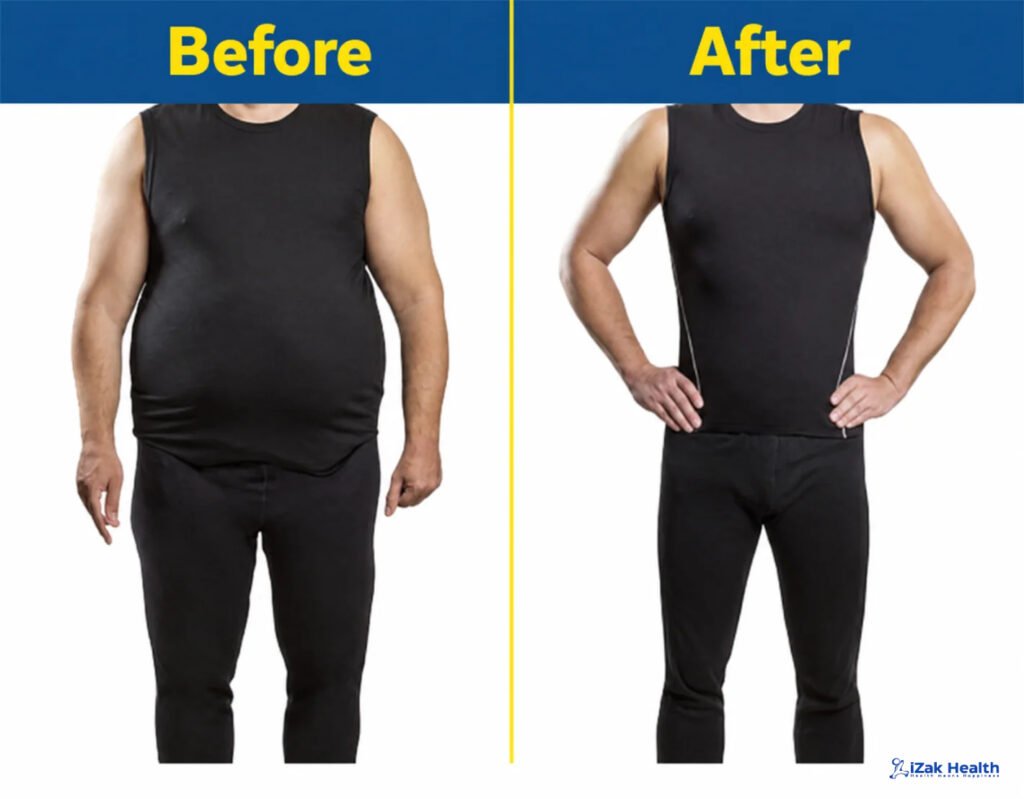
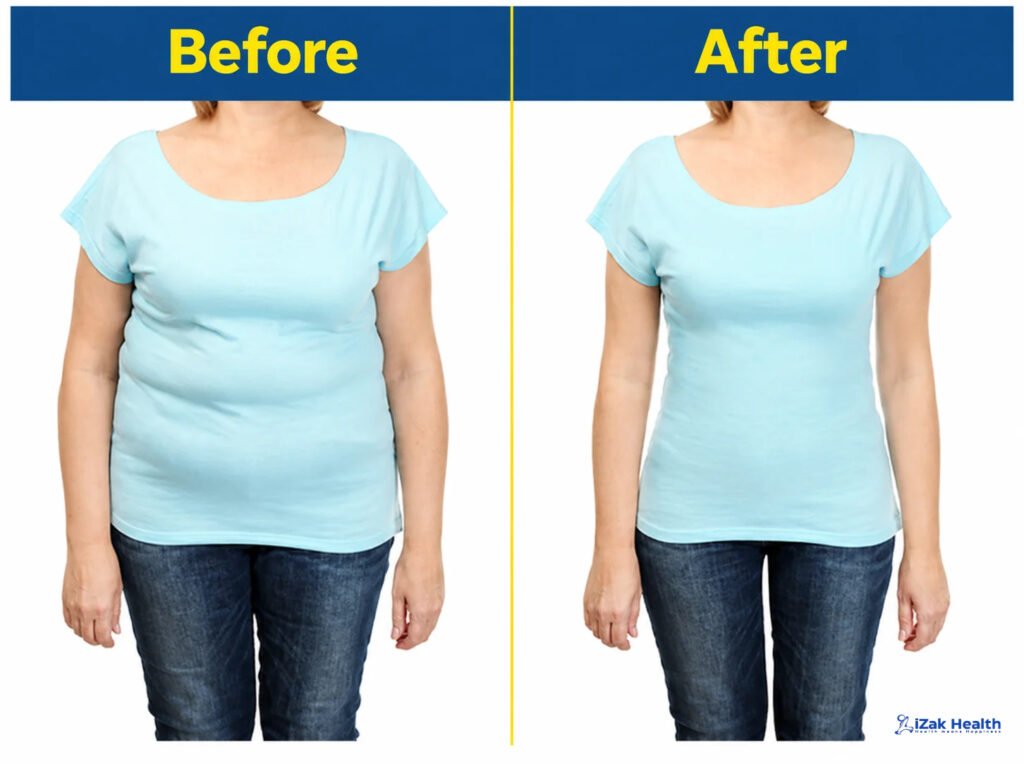
Before & After Weight loss Surgery
When Should Weight Loss Occur?
Sometimes weight gain happens gradually, and you aren’t aware of the changes occurring. Other times, you eat and drink unhealthy foods, and don’t move enough. Either way, here are instances that show you need to lose weight.
1. You Have High Blood Pressure and Cholesterol
Having high blood pressure and cholesterol can be attributed to many factors, including genetic predisposition. Belly fat, on the other hand, puts a greater risk on one’s health, including high blood pressure and cholesterol, and increases the risk of heart disease and diabetes. But losing weight with effective and safe weight loss treatments and procedures can greatly lower these risks.
2. It’s Painful to Get Up from a Chair, Walk, or Take Stairs
If walking to the nearest playground to play with your grandkids seems difficult or if climbing the stairs seems strenuous, it’s probably time to get your weight under control before it starts affecting your way of life. With weight loss treatments, not only can you get your life back, but you can start living a longer and healthier life.
3. You Are Pre-Diabetic or Type 2 Diabetic
If you’ve felt constantly thirsty and need to pee a lot and have had a high BMI for years, you may have undiagnosed type 2 diabetes or be pre-diabetic. But it is possible to reverse and improve these conditions by losing weight.
Excess body weight can negatively affect all your organs, including your pancreas. Your pancreas can help store and release insulin, which is a hormone that can help lower blood glucose levels. When an overweight person is able to successfully lose weight, the pancreas starts working better and is able to help control blood glucose levels, which helps overcome diabetes.
4. You Find Exercise Very Difficult
If you are conscious about your weight and feel too embarrassed to go to the gym because you feel too judgmental, or find exercising very difficult because of your extra weight, then that is also a clear sign that you need to lose weight. Exercising, and weight loss in general, can seem very challenging and exhausting, and sometimes, act as a barrier. This barrier can act as an obstacle towards something greater. Weight loss treatments such as weight loss surgeries can help people lose weight in a safe and effective manner.
Effects of Weight Loss on Health
There are a lot of reasons for wanting to lose weight. Whether you want to lose weight in order to be healthier or just to feel better in your own body, there are lots of great benefits to losing weight. Losing weight can impact your health in an extremely positive way.
Some positive health effects of weight loss are:
1. Positive Control of Diabetes/Blood Sugar Levels
If you lose weight, your body will have less adipose tissue, and there will be less inflammation in your body. If the body has less inflammation, it will be easier for your body to regulate your blood sugar. This means losing weight can positively impact people who have type 2 diabetes.
2. Improves Heart Health
If you have excess weight on your body, the extra weight puts pressure on your heart, and your heart has to work harder to push blood to the rest of your body. If you lose weight, your body won’t have to work as hard to push the blood throughout your body, and your blood pressure will go down. Also, losing weight can cause your body to have less bad cholesterol. It does not matter how you lose the weight. Whether you lose weight from exercise or weight loss surgery, you’ll gain these benefits.
Weight loss surgery comes with trade-offs. Although the surgery requires you to make certain dietary changes to preserve the lost weight, these surgeries can result in a greater loss in body weight, compared to more conservative treatments.
3. Reduced Risk of Stroke
The risk of stroke decreases as body weight decreases. One way to accomplish this is by lowering your blood pressure, which can be accomplished by losing 5% to 10% of your starting weight.
4. Reduced Risk of Certain Cancers
Weight loss can lower the risk of several cancers, including endometrial, kidney, breast, pancreatic, and liver cancers. The exact reason for this relationship is unclear; however, it is believed that obesity can lead to cancer as a result of swelling in the organs (visceral adiposity) because of excess body weight.
5. Better Sleep
Losing just 10% to 15% of body weight can enhance sleep quality and decreases sleep apnea in obese patients.
What Happens During Weight Loss Surgery?
Step 1 · 30–60 mins
Hospital Admission
The patient is brought to the hospital for surgery on the scheduled day.
Admission formalities are completed.
The vital signs are checked.
The bariatric surgeon reviews the patient’s reports and plans, and reviews the patient’s history.
Step 2 · 20–40 mins
Pre-Surgery Preparation
The type of planned surgery is confirmed, i.e. a sleeve gastrectomy, a bypass surgery, or a mini bypass surgery.
The anesthetist performs a final assessment before anesthesia.
The patient is provided with information on the surgery, benefits and risks, and expected outcome, and the recovery procedure, and obtains informed consent.
An IV is started for fluids, medications and for placement of the anesthesia.
The patient is taken to the operating room.
Step 3 · 10–15 mins
Anesthesia Administration
General anesthesia is provided to keep the patient pain-free and asleep for the entire surgery.
The abdomen is cleaned with antiseptic solution and covered with a sterile drape.
The surgical team prepares the patient to perform a minimally invasive procedure.
Step 4 · 1–3 hours
Weight Loss Surgery
A series of small incisions are made in the abdomen for the introduction of the laparoscope and other instruments.
The bariatric surgeon then alters the stomach and/or the small intestine to reduce the stomach capacity.
The connections and the stomach are inspected for any bleeding and leaks.
The incisions are closed, and sterile dressings are applied.
Step 5 · 1–3 hours
Recovery Room Observation
The patient is moved to the recovery room for further observation.
While your surgical wound heals, we will continue to monitor your blood pressure, pulse, and level of oxygen in your blood, along with your pain and how you are recovering from the surgery.
IV fluids and pain medications are initiated, along with mobilization as needed.
Patients are encouraged to walk as they are medically allowed.
Step 6 · 1–3 days
Discharge & Recovery
The average hospital stay for the surgical procedures is 1–3 days.
You will be instructed on a gradual diet progression from liquids to regular foods.
You will be prescribed Vitamin supplements and pain medications and instructed to drink plenty of fluids.
You will lose weight and be monitored for signs of malnourishment.
It is vital that you call for immediate medical attention for any of the following symptoms:
Severe Abdominal Pain
Difficulty Keeping Food Down
Continual Vomiting
Higher than Normal Temperature
Wound Breakdown or Infection
Chest Pain or Shortness of Breath
Signs of Dehydration
What Are the Different Kinds of Weight Loss Treatments?
Untreated obesity can lead to medical problems such as heart diseases, stroke, cancer, type 2 diabetes, and PCOD. Hence, obesity requires long-term management by various weight loss options.
There are medicines, devices, exercises, and treatments that can help you achieve desired weight loss and improve your health. However, some people fail to lose sufficient weight or are unable to maintain the lost weight. In such cases, your doctor may suggest a weight loss treatment to help you sustain the weight loss.
There are different treatments that target the anatomy and hormones of the stomach and the digestive system. As a result, the person is satisfied for longer and feels less hungry. The person is then able to better control his/her food intake and promote fat burning.
Weight Loss Treatment
Weight loss surgeries are the most effective way to lose weight. Many studies show these types of procedures not only reduce weight but help to improve obesity-related conditions such as hypertension, diabetes and sleep apnea. Some of the best weight loss surgery options are:
1. Gastric Ballooning
Also known as the “weight loss balloon,” is a simple weight loss procedure that is performed by endoscopically placing a soft, adjustable, and durable, paddle-shaped balloon into the stomach to occupy space and make it feel full, reducing the patient’s desire to eat.
2. Bariatric Surgery
Bariatric surgery includes a plethora of procedures performed on individuals that are overweight.
Sustainable weight loss through the standard care methods (gastric bypass, sleeve gastrectomy, and biliopancreatic diversion with duodenal switch) is achieved by modifying gut hormone levels in charge of hunger and satiety, thus resulting in a new hormonal weight set point.
What Is Gastric Ballooning?
Gastric Ballooning is a weight loss procedure where a soft yet durable gastric balloon is swallowed. This weight loss surgery is non-surgical and helps people who are overweight to lose excess weight. The gastric balloon, or stomach balloon, is an inflatable medical device that is placed into the stomach to help induce weight loss by improving satiety and reducing the emptying of the stomach.
Gastric Ballooning is less invasive and can be a better option than traditional endoscopic balloon treatment. Additionally, non-surgical gastric balloon treatment is better than bariatric surgery. The Allurion program is a non-surgical weight loss program offered by Pristyn Care, that uses the world’s first Allurion swallowable balloon pill. The Allurion program is a holistic 6-month program that is completed by using an Allurion Connected Scale and the Allurion App. The program helps achieve an average weight loss of 10–15% body weight in ~16 weeks.
Procedure Overview for Gastric Ballooning Treatment
The Allurion Pill is taken with water. Results from the program can last a lifetime and help achieve 95% weight loss in 1 year.
The Allurion Pill is approved by the FDA and has a good track record of safety and efficacy. Side effects are rare and reversible. As with other medical devices, results may vary.
Pristyn Care can help you find reliable doctors to help you with the Allurion program.
Healthcare professionals will talk about your weight loss goals during the consultation and at subsequent steps. They will also consider your medical history to see if the gastric balloon is appropriate for you.
If the treatment is appropriate, a balloon is swallowed under the guidance of medical professionals with a glass of water (without anesthesia or endoscopy).
After the balloon is placed in the stomach, it is inflated with a basic sterile solution. The placement of the gastric balloon is confirmed by x-rays.
The gastric balloon gives a sense of fullness and ultimately results in weight loss.
You will also be put on a dietary program to sustain weight loss and incorporate balance in your lifestyle. You will also learn to readjust your relationship with food and regain your balance. The Allurion Weight Loss Program helps safely lose weight and develop healthy lifestyle changes.
Pros and Cons of a Gastric Balloon
Pros of Gastric Balloon
The gastric balloon is a less invasive procedure than surgery.
The gastric balloon is a temporary measure.
The cost of a gastric balloon procedure is less than the cost of bariatric surgery.
Most people are candidates for a gastric balloon procedure.
Safety and weight loss success is higher with gastric balloon as compared to other procedures.
Cons of Gastric Balloon
Average percentages of weight loss with a gastric balloon is less than bariatric surgery.
Weight is regained after the balloon is removed.
Weight loss results take longer with gastric balloon.
Certain food items need to be avoided.
Acid reflux, nausea and vomiting are side effects of gastric balloon.
What Is Bariatric Surgery?
Bariatric surgery, as the name indicates, is surgery to lose weight. It is also known as Weight Loss Surgery. Other kinds of Weight Loss Surgery include Gastric Balloons. Bariatric surgery is more recognized than Gastric Balloons. However, Bariatric surgery is more invasive than Gastric Balloons.
Bariatric surgery modifies our digestive system. The surgery alters our stomach and small intestine to reduce the quantity of calories that the body absorbs. This also lessens the number of hunger signals that are sent from our digestive system to the brain. It takes deep-rooted lifestyle changes to be successful at this kind of surgery.
Types of Bariatric Surgery
The three types of bariatric surgery are as below:
Gastric Bypass
Lap-band
Sleeve Gastrectomy
Biliopancreatic Diversion
1. Gastric Bypass
In a gastric bypass, a small stomach pouch is created using surgical staples. The small stomach pouch is then connected to a portion of the small intestine. This makes the stomach bypass the rest of the stomach. This causes a person to feel full with less food and to absorb fewer calories from the food they eat.
2. Sleeve Gastrectomy
A different kind of surgery is called a Sleeve Gastrectomy. In this surgery, a large part of the stomach is removed. This part is around 80% of the stomach. After this surgery, the remaining part of the stomach is smaller and holds less food. This causes a person to feel full with less food.
3. Biliopancreatic Diversion
A biliopancreatic diversion is similar to a gastric bypass, and part of the stomach is removed. The remaining stomach is then connected further down the small intestine. This causes even fewer calories to be absorbed from the food consumed. This surgery causes even more side effects than a gastric bypass and is not as common.
Pros and Cons of Bariatric Surgery
Pros of Bariatric Surgery
You may have your type 2 diabetes reversed.
Improvement of your cardiovascular health.
Improvement of your physical energy.
Better control of your blood sugar.
Enhancement of your quality of life.
Cons of Bariatric Surgery
It is risky and invasive surgery.
Your recovery time is longer.
You have a higher risk of developing nutritional deficiencies, kidney stones and osteoporosis.
Acid reflux/heartburn is worse.
Esophagus may dilate.
You may be unable to eat certain foods.
You have a higher risk of obstructions in your stomach.
You may still have weight gain or not lose weight.
Benefits of Weight Loss Surgeries
Weight loss surgeries, including Gastric Ballooning and Bariatric Surgery, are transformative for individuals looking to lose weight. Weight loss surgeries can result in sustained weight loss for individuals who are obese and who haven’t been able to attain long-lasting success from other weight loss efforts. Some benefits of weight loss surgery include the following:
Sustained loss of weight
Improvement of related complications of obesity
Remission of type 2 diabetes
Improvement of cardiovascular health
Resolution of depression
Relief of joint pains
Resolution of obstructive sleep apnea
Improvement of fertility
What Is Liposuction?
Liposuction is the removal of fat from specific areas of the body by way of a surgical procedure. This procedure is also known as lipoplasty or body contouring surgery. Improving the shape of the body is the reason liposuction is done. This is accomplished by removal of fat from the abdomen, thighs, hips, arms, back and chin.
Liposuction is done to remove localized fat deposits that are usually resistant to diet and exercise. A surgeon makes small incisions in the area to be treated and then inserts a cannula to remove the fat by way of suction.
Liposuction should not be viewed as a form of weight loss. It should be understood that liposuction is a body contouring procedure that helps patients accomplish a well-defined body shape by removal of localized fat deposits that usually are not removed by diet and exercise. It should be understood that patients should maintain their body weight in a stable manner in order to realize the benefits of the procedure.
Different Types of Liposuction
Different types of liposuction are the following:
Traditional Liposuction
Tumescent Liposuction
Ultrasound-Assisted Liposuction (UAL)
Power-Assisted Liposuction (PAL)
Laser-Assisted Liposuction
1. Traditional Liposuction
This type of liposuction is done to remove fat from different areas of the body. A cannula is inserted through small incisions and fat is removed from the area by way of suction.
2. Tumescent Liposuction
A tumescent solution is first injected into the area to be treated. This solution is comprised of saline, a local anesthetic, and a drug which reduces bleeding. Once injected, this solution prepares the fat for removal and reduces discomfort and blood loss. The excess fat is then removed with a cannula.
3. Ultrasound-Assisted Liposuction (UAL)
Ultrasound-assisted liposuction employs ultrasonic energy to break down fat cells. This energy is then used to emulsify the fat cells for removal. This type of liposuction is used for treatment of fibrous or dense fat deposits. The suitability of this technique depends on the patient and the treatment area.
4. Power-Assisted Liposuction (PAL)
With power-assisted liposuction, a cannula oscillates or vibrates at high speeds, which helps loosen the fat for easier removal. The rapid movement allows for faster and more efficient removal of the fat.
5. Laser-Assisted Liposuction
Laser energy is used to break down the fat cells for easier removal in laser-assisted liposuction. The energy also acts on the adjacent tissues. This type of liposuction is more appropriate for smaller, more circumscribed treatment areas. The results of this technique are dependent on the patient, treatment area, and the surgeon’s assessment.
Frequently Asked Questions (FAQ)
Is it a good idea to get Weight Loss Surgery?
If your BMI is greater than or equal to 40, you may be a candidate for Weight Loss Surgery. It’s also possible if your BMI is greater than or equal to 35 and you suffer weight-related health issues like Type 2 Diabetes, high blood pressure, sleep apnea, etc. However, you should consult your healthcare professional to understand the possible solutions you have to solve your weight issues.
What is the safest form of Weight Loss Surgery?
Gastric Balloon Treatment is considered the safest form of Weight Loss Surgery compared to other surgeries, including bariatric surgery. This is a treatment that helps obese patients throw off excessive weight without the requirement for surgery.
Are weight loss surgeries safe?
Weight loss surgeries are safe compared to the threats of living with obesity for an entire life. Gastric Balloon Treatment and Bariatric Surgery are among the safest and most thriving surgeries for weight loss. It is believed to be safe when associated with other elective surgeries.
Can weight loss injections be an alternative to weight loss surgery?
Yes, for some people, prescription weight loss injections can be an alternative to bariatric procedures, depending on variables such as BMI, overall health, weight loss goals, and obesity-related medical conditions. Medications such as Wegovy, Mounjaro, and Ozempic can help you lose weight by making you feel less hungry and more full. However, these treatments may not be appropriate for everyone and for those with morbid obesity or serious obesity-related health problems, bariatric surgery or an intragastric balloon procedure may be more helpful. You can get a bariatric specialist to check you out and recommend what is best for you.
How to tighten loose skin after weight loss without surgery?
After Weight Loss Surgery you can get rid of the tightened skin by taking nutrients like collagen, doing resistance training and with medical procedures.
What is the minimum BMI for Weight Loss Surgery?
Weight Loss Surgery is guided by medical guidelines based on body mass index, or BMI. Weight Loss Surgery may be an option for an adult with a BMI of 40 or greater. Additionally, surgery can also be done if your BMI is more than or equal to 35 and you have weight-related health complications such as type 2 diabetes and high blood pressure.
What are the common problems after Weight Loss Surgery?
Weight loss surgeries are often complicated by infection, internal bleeding and blood clots. Other possible risks of Weight Loss Surgery can include the development of kidney stones, not losing the desired weight and regaining weight.
How bad is the pain after a weight loss treatment?
After surgery most patients have some pain. However, bariatric surgery is a little more painful than Gastric ballooning, as it is an invasive surgical procedure for weight loss.
When can I start exercising again after surgery?
Walking after any Weight Loss Surgery is encouraged. “The trick is to take it easy and listen to your body.” If you weight train, keep it low impact for the first month. Then if you feel pain stop and relax. If you swim, let your wounds heal before you go back in the water. Always start swimming slowly.
When can I go back to work after surgery?
Most patients resume work two to four weeks following weight loss surgery, such as bariatric or gastric ballooning. When a person has gastric ballooning, they can go back to work even sooner. Patients experience low energy for one to two weeks as a result of the decreased calorie intake. However, after consuming soft food, the majority of patients regain their energy.
Can I get pregnant after Weight Loss Surgery?
After any weight loss operation, it is recommended to wait at least 12 to 18 months before getting pregnant. You can aim to become pregnant once the weight has stabilised and the months of recuperation have gone by. But you must be properly watched by a nutritionist who is familiar with your weight loss surgery.
Add Your Heading Text Here
HexaHealth is a patient-first platform that takes care of patient’s entire surgical journey from finding the right doctor and right hospital, to hospital admissions, insurance, financing and post surgery recovery.
 Get free consultation for 50+ conditions across India
 Online and offline consultations with expert surgeons
 Extensive assistance throughout your treatment
Get a Free Consultation
izak Health is a doctor-founded healthcare organisation helping patients access specialised medical and surgical treatment through doctors and healthcare facilities where they practise.
izak Health
Treatments
Policies
Book Appointment
©2026 Izak Health All Rights Reserved.